
Choosing where to stay in San Francisco can feel overwhelming, especially for first-time visitors. Two of the most common options travelers consider are Union Square and Fisherman’s Wharf. Both are iconic, both are centrally located, and both offer very different experiences. Understanding the differences between these two neighborhoods can help travelers choose the area that best matches their plans, pace, and expectations.
This comparison breaks down Union Square and Fisherman’s Wharf across key factors such as atmosphere, walkability, transportation, nearby attractions, and who each neighborhood is best suited for. Rather than naming a universal winner, the goal is to help travelers decide what works best for their visit.
Understanding San Francisco’s Geography
San Francisco is compact but layered, with neighborhoods that feel distinct despite their proximity. Travel times between major areas are generally short, but hills, transit routes, and street patterns influence how easy it feels to move around on foot.
Union Square sits in the heart of downtown, while Fisherman’s Wharf is located along the northern waterfront. Both areas are well known, but they serve very different travel styles.
Union Square: Central and Connected
Union Square is one of San Francisco’s most central neighborhoods. It functions as a transportation hub, shopping district, and gateway to many other parts of the city. For travelers who want flexibility and easy access to multiple neighborhoods, Union Square offers a strong home base.
Atmosphere
Union Square is energetic and urban. During the day, the area is busy with shoppers, office workers, and visitors. In the evenings, theaters, restaurants, and bars keep the neighborhood active. While it is lively, many side streets offer quieter pockets.
Walkability and Transit
Union Square is extremely well connected. Multiple Muni lines, cable cars, and nearby BART stations make it easy to reach SoMa, the Financial District, Civic Center, Chinatown, and the Embarcadero. Many attractions are within walking distance, making it ideal for travelers who want to explore without relying heavily on rideshares.
Who Union Square Is Best For
- First-time visitors who want to explore multiple neighborhoods
- Conference attendees visiting Moscone Center
- Travelers who enjoy dining, shopping, and cultural venues
- Visitors staying for several days
Fisherman’s Wharf: Waterfront and Iconic
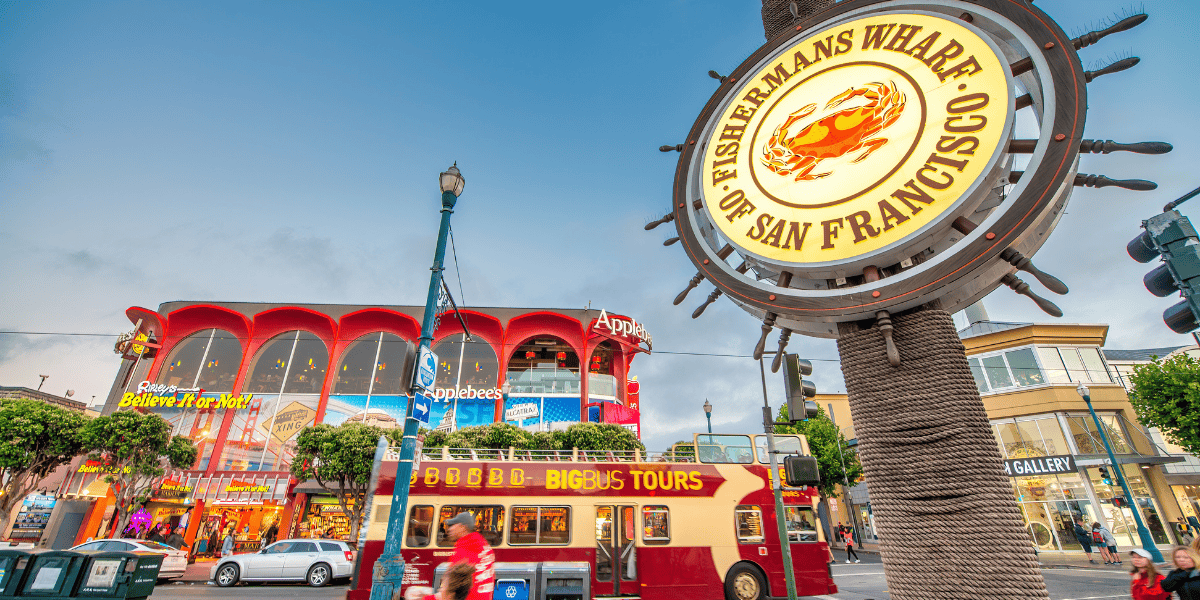
Fisherman’s Wharf is one of San Francisco’s most recognizable areas. Known for its waterfront views, historic piers, and classic attractions, it remains a popular choice for tourists, especially those visiting the city for the first time.
Atmosphere
Fisherman’s Wharf is lively, busy, and tourist-oriented. During the day, the area is filled with visitors exploring attractions, street performers, and waterfront restaurants. Evenings are generally quieter, with fewer local dining and nightlife options compared to downtown.
Walkability and Transit
The Wharf is walkable within its own area, but it is more isolated from other neighborhoods. Public transportation options exist, including cable cars and buses, but reaching downtown, SoMa, or the Mission often takes longer than from Union Square.
Who Fisherman’s Wharf Is Best For
- Short stays focused on sightseeing
- Families visiting major attractions
- Travelers planning Alcatraz tours
- Visitors who prefer a waterfront setting
Attractions and Things to Do
Near Union Square
Union Square provides easy access to a wide range of attractions. Guests can walk to Chinatown, North Beach, downtown theaters, and shopping districts. The area also serves as a convenient starting point for exploring Golden Gate Park, museums, and neighborhoods like Hayes Valley.
Near Fisherman’s Wharf
Fisherman’s Wharf is close to Pier 39, Alcatraz departure points, Ghirardelli Square, and waterfront walks. These attractions are highly concentrated, which can be convenient, but many travelers find themselves traveling farther for dining, nightlife, and cultural experiences.
Dining and Evening Experience
Union Square offers broader dining variety, from casual eateries to upscale restaurants. Evening options include live theater, bars, and cultural venues. The area remains active later into the night.
Fisherman’s Wharf dining focuses largely on seafood and tourist-friendly restaurants. While there are classic spots, many visitors leave the area in the evening to find more variety elsewhere in the city.
Travel Times and Convenience
From Union Square, most major neighborhoods can be reached within 15 to 30 minutes using public transit or rideshare. This makes it easier to build flexible daily itineraries.
From Fisherman’s Wharf, travel times to central neighborhoods are longer and often require transfers. While the waterfront location is scenic, it can feel less efficient for travelers planning to explore beyond the Wharf.
Which Neighborhood Makes More Sense?
The decision between Union Square and Fisherman’s Wharf depends on travel goals. Travelers who want to see many parts of the city, attend events, or stay for several days often benefit from Union Square’s central location. Those focused on classic sightseeing and short stays may enjoy the convenience of Fisherman’s Wharf.
Neither choice is wrong, but understanding how each neighborhood functions helps avoid frustration and maximizes enjoyment.
A Central Stay Near Union Square
Tilden Hotel is located near Union Square, offering a convenient base for travelers who want to explore San Francisco beyond a single neighborhood. From this location, guests can reach Fisherman’s Wharf, the waterfront, and other major destinations using public transit or a short rideshare.
The hotel provides a comfortable place to recharge after busy days, with guest rooms featuring pillow-top mattresses, high-speed Wi-Fi, a 55-inch flat-screen TV with streaming access, a mini refrigerator, and a coffee machine.
Room options include Standard Double Rooms, Deluxe King Rooms, and Junior Suites with additional space. For guests seeking more privacy, the Rooftop Penthouse offers a private living area and rooftop terrace overlooking the city.
Making the Most of Your Stay
San Francisco rewards travelers who choose a location that supports how they want to experience the city. By understanding the strengths of Union Square and Fisherman’s Wharf, visitors can select a neighborhood that aligns with their plans, pace, and interests.
Whether you prioritize flexibility, sightseeing, culture, or convenience, choosing the right base allows you to focus on enjoying San Francisco rather than navigating it.